
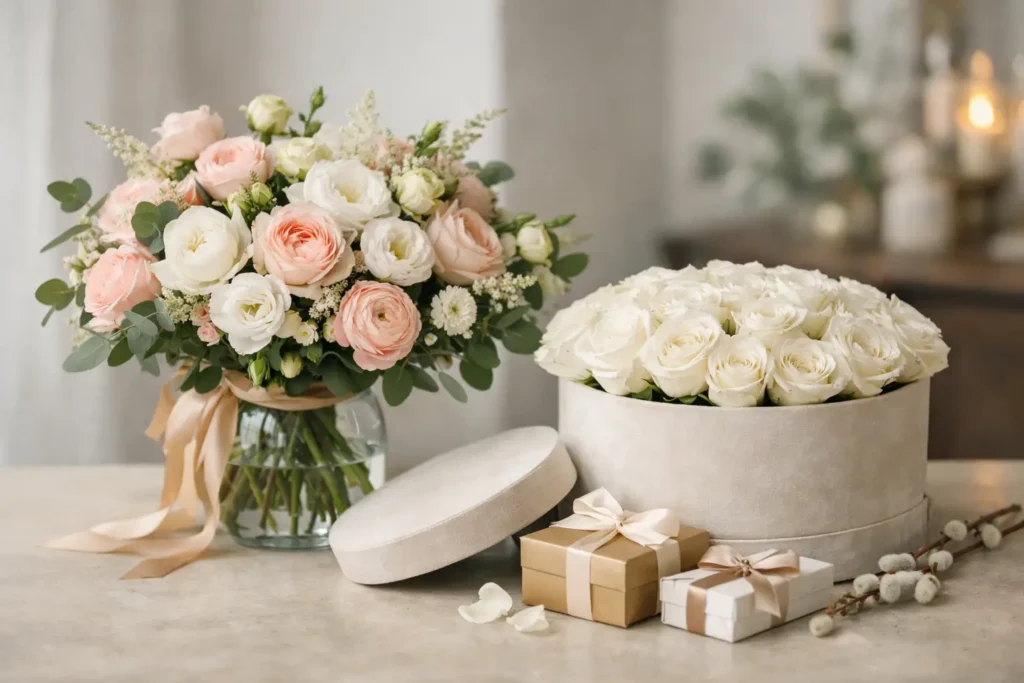
Wedding flowers delivery involves more moving parts than a standard bouquet order. Personal flowers, ceremony installations and reception pieces may travel to different areas of a venue, arrive at separate times or need to be installed before guests enter. A clear delivery plan protects the design and gives the couple one less thing to manage on the day.
The first step is to decide who owns each handover. The florist needs a venue contact, a location for each arrangement and a schedule with enough time for setup. Wedding flowers delivery should be included in the overall run sheet, not left as a vague note that says “flowers arrive in the morning.”
Make one delivery schedule
List the expected arrival time, venue address, access point, contact name and destination for every item. Include bouquets, buttonholes, ceremony features, reception centrepieces and any hired stands or vases. If there are two venues, note the transfer plan. Share the schedule with the florist, planner, venue coordinator and whoever is receiving personal flowers.
Confirm access restrictions before the wedding week. Some venues only allow deliveries through a loading dock or at set hours. Others require a lift booking or have limited parking. Explain whether the florist must set up independently or can work alongside the venue team. Wedding flowers delivery is smoother when the florist knows the site rules before loading the van.
Allow time for setup and inspection
A delivery date alone is not enough for a complex installation. Ask when the florist expects to arrive and how long setup will take. Build a buffer before the ceremony, particularly if the design includes an arch, hanging installation or multiple rooms. A couple or planner should inspect the completed work while there is still time to resolve a missing piece or access issue.
Personal flowers need a separate handover plan. Decide where bouquets will be stored, who distributes them and when buttonholes are pinned. Keep bouquets cool and in water when possible. Avoid leaving them in a warm car or direct sunlight. If the event is outdoors, tell the florist about expected exposure and ask how to protect delicate stems.
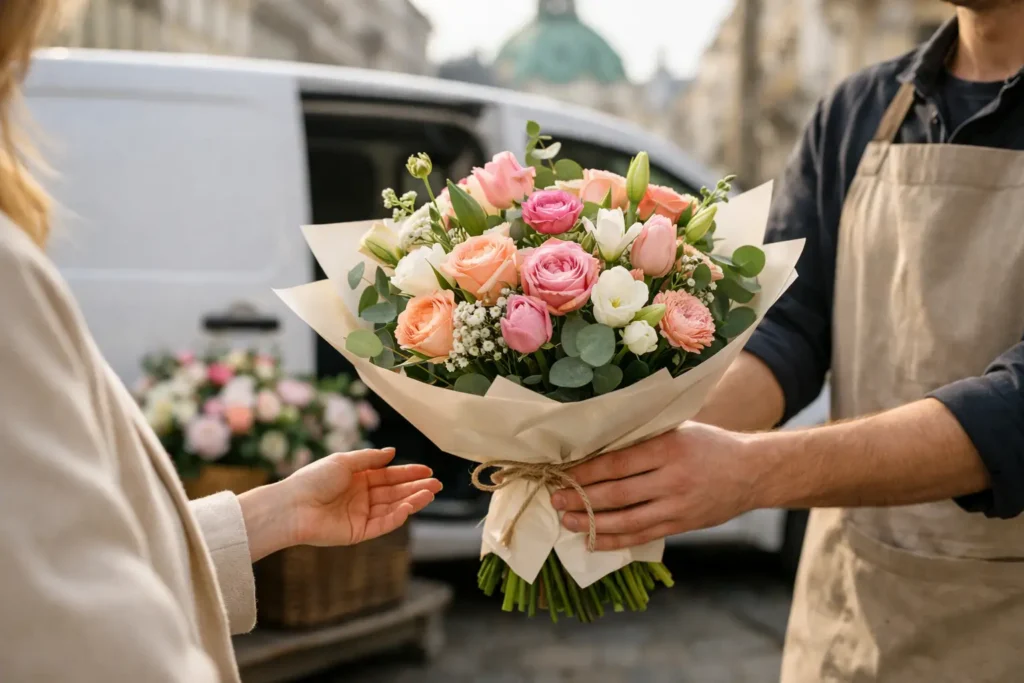
Coordinate reuse and relocation
Reusing ceremony flowers at the reception can improve value, but only if the move is practical. A heavy plinth arrangement may need two people and a trolley. An arch installation might not be safe to dismantle quickly.
Ask the florist to specify which pieces can be reused, who will move them and whether a relocation fee applies. Wedding flowers delivery to two locations may require extra transport and labour.
Make sure the reception layout is ready for the reused pieces before they arrive. Tell the venue coordinator which table, entrance or stage should receive each arrangement. Clear labels and a simple floor plan reduce guesswork when the event is busy.
Discuss flowers, weather and handling
Fresh stems need protection from heat and dehydration. If a delivery waits outdoors, direct sun can affect the flowers before the ceremony. Ask the venue for a cool holding area and confirm access to water for bouquets. The University of Melbourne’s work on vase life in Australian native cut flowers shows that varieties can respond differently to post-harvest conditions. Your florist can advise which choices suit the schedule and setting.
If the wedding takes place outdoors, create a weather contingency. Secure tall pieces, weight arrangements and identify a shaded alternative location. Confirm whether the venue’s indoor backup has different dimensions or restrictions so the design can adapt if needed.
Confirm payment, scope and terms
Review the written proposal to ensure it includes delivery, installation, travel, hire, relocation and pack-down where applicable. Clarify who is responsible if the venue changes access times or if the event schedule shifts. Keep the final design and delivery instructions together with the vendor contacts. The Australian Competition and Consumer Commission offers general guidance on consumer rights and guarantees; the florist’s own written terms explain the particular service and agreement.
Use a practical run sheet
A strong run sheet names a primary venue contact and a backup. Include the florist’s phone number, arrival window, access instructions and the location of each floral item. Add when bouquets are distributed and when ceremony pieces move. Share one final version with everyone involved, then avoid last-minute changes unless necessary.
Wedding flowers delivery questions
How early should the florist arrive?
Ask the florist to recommend an arrival and setup window based on the venue and installation. Build buffer before guests arrive, especially if the design includes an arch, hanging pieces or several rooms. Wedding flowers delivery should be included in the run sheet, with a named person available to receive the team.
Who should accept the flowers?
Choose a venue coordinator, planner or trusted contact who knows where every arrangement belongs. Share the contact’s mobile number and a floor plan. Personal flowers may need a separate handover, so decide who distributes bouquets and buttonholes. A clear contact prevents confusion when the couple is busy getting ready.
Can ceremony pieces move to the reception?
Often, but the size, mechanics and travel time determine whether reuse is realistic. Ask which items can be moved, who will move them and whether the venue needs a reset window. Include relocation labour in the written proposal so wedding flowers delivery and the reception schedule stay aligned.
What if the venue changes access times?
Tell the florist as soon as possible and confirm any revised setup plan in writing. Limited access can affect installation and the order of work. Keep the venue and floral team on the same run sheet, and identify a backup contact in case the main coordinator is unavailable.
Give the florist a reliable point of contact
The couple may be getting ready or taking photographs when the van arrives, so choose another person to handle the handover. That contact should know where bouquets, personal flowers and ceremony pieces belong.
Keep the florist’s number in the run sheet, and make sure someone can answer if a venue entrance is locked. Wedding flowers delivery is smoother when the driver has one clear contact instead of several conflicting instructions.
If the schedule changes, send the update to both the florist and venue coordinator. Include the order number, new time and any revised location. Do not rely on a message passed verbally through several people. A short written confirmation helps everyone work from the same plan.
Reconfirm the plan before the wedding
Send the florist the final venue contact and access instructions several days before the event. Confirm the setup window, location for each arrangement and any changes to the ceremony timeline. Wedding flowers delivery can be affected by a venue’s loading rules or room turnover, so it is worth repeating the key details rather than assuming the original email is still current.
Check that someone will be available to receive bouquets and personal flowers. If the contact is also part of the wedding party, nominate a backup. Keep boxes and hired pieces in the agreed area so the venue team knows what must be returned. A quick confirmation makes wedding flowers delivery one less uncertainty on the day.
Keep delivery out of the spotlight
Wedding flowers delivery should feel invisible to the couple and seamless to the guests. Confirm access, assign a receiving contact and build setup time into the day. Plan for care, relocation and weather in advance. When the handover is organised, the florist can focus on the design and the couple can focus on the celebration.